Signs of Elder
& Child Abuse
If you are trying to understand whether you are in an abusive relationship, please see the Signs of Domestic Abuse page.
This page is specifically focused on warning signs that a third party may recognize in a vulnerable elder, child, or adolescent. Many people search for signs of child abuse, signs of elder abuse, or how to recognize abuse in someone else. These lists are meant to help identify concerning patterns that may warrant immediate attention.
Important: everyone has a legal duty to report suspected child abuse, even if they do not work with children. In many situations, elder abuse may also need to be reported, though the exact duty can vary depending on the victim’s living situation and local laws.
These lists are not all-inclusive. Additional signs not seen on this page may also indicate abuse. If you suspect abuse, contact Child Protection Services or Adult Protection Services in your area. If you are unsure where to start, try calling the police non-emergency line or another local protective service for direction.
Signs of Elder Abuse
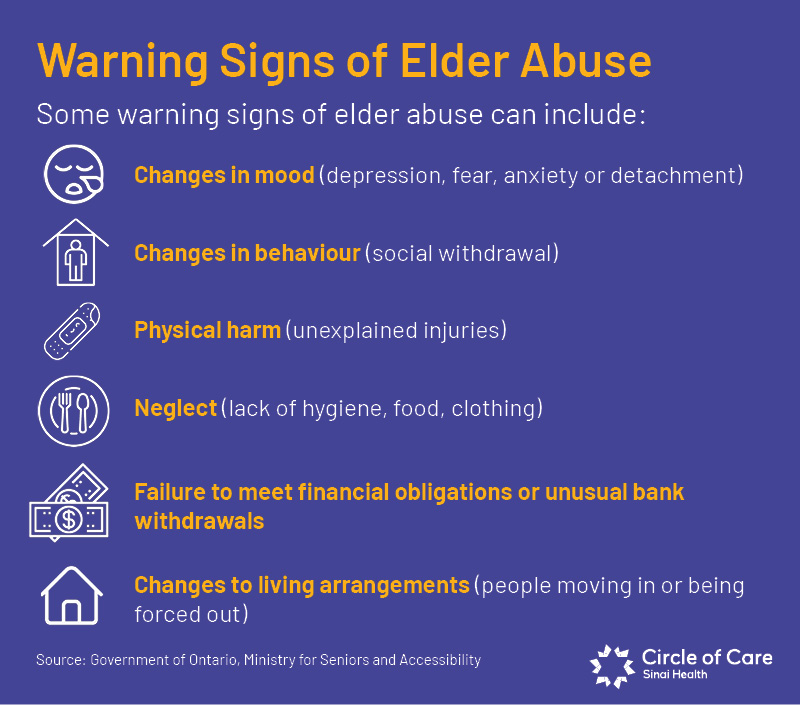
- Fearful, anxious, poor eye contact, or unusually childlike speech
- Hesitant to speak openly, paranoid, or ashamed
- Unusual or new anger, sadness, or low self-esteem
- Appears underweight, malnourished, or dehydrated
- Inadequate self-care, physical hygiene, or oral hygiene
- Has unwillingly signed over power of attorney or financial control
- Possessions are missing or there is unexplained lack of money
- Caregiver appears indifferent, angry, hostile, or controlling
- Caregiver does not visit the elder or offer basic assistance
- Caregiver is always present and answers for the elder
- Broken dentures, hearing aids, glasses, or other devices
- Complaints of genital irritation, pain, or itching
- Areas of baldness or damaged hair from hair pulling
- Bruises, welts, bites, burns, bloodshot eyes, or bedsores
- Explanations for injuries are insufficient or inconsistent
- Exaggerated or absent emotional response from caregiver regarding injuries
See this guide on Elder Abuse.
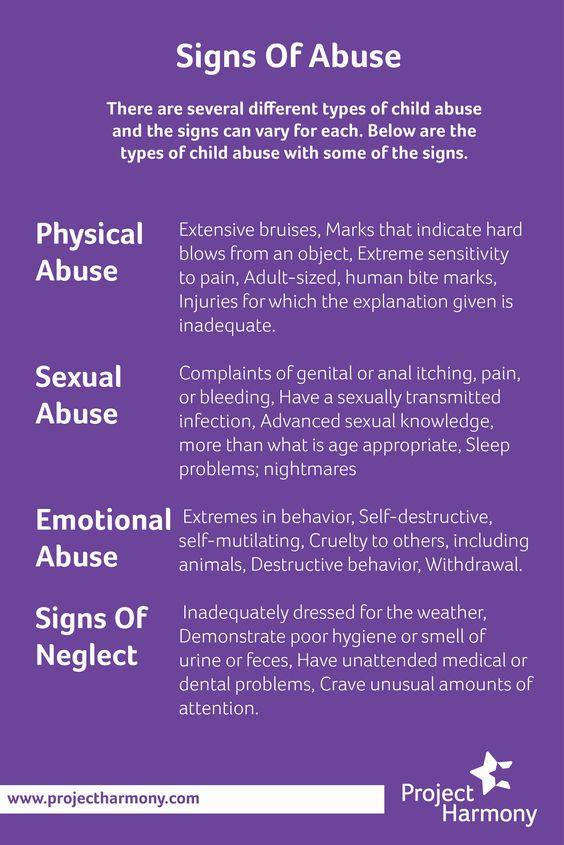
Signs of Child or Adolescent Abuse
Note: “child” may also mean “adolescent,” and “parent” may also mean “caretaker.”
- Parent ignores, fails to comfort, or actively rejects the child
- Little to no positive reinforcement is provided
- Child’s social, educational, or physical needs are ignored
- Harsh, cruel, negative, or belittling comments are directed at the child
- Toddler does not protest the parent leaving the room
- Child appears to prefer other adults over the parent
- Anxious, fearful, poor sleep, or unusual emotional reactions
- Self-destructive behaviours, social withdrawal, stealing, or cheating
- Complaints of genital irritation, pain, or itching
- A non-parent adult becomes unusually close or shows favoritism
- Child is made to feel special, receives gifts, or is told to keep secrets
- Child has been threatened not to share details of a “special friendship”
- Boundary violations or no safe private space, such as a bedroom
- Parent spends excessive time with child, especially in the child’s room or at night
- Very attentive parent paired with an apprehensive or fearful child
- Child shows unusual sexual behaviour, jokes, or body language
- Low self-esteem, changes in mood, or sudden decline in school performance
- Areas of baldness or damaged hair from hair pulling
- Bruises, welts, bites, scratches, scalds, or cigarette burns
- Explanations for injuries are insufficient or inconsistent
- Parent appears angry at or blaming the child or sibling for the injury
- Exaggerated or absent emotional response from parent regarding injury
See this guide on Navigating Child Sex Abuse.