Signs of Domestic Abuse
Many people do not immediately realize that what they are experiencing is abuse. Domestic abuse and relationship abuse can involve more than physical violence. It can also include emotional abuse, verbal abuse, psychological abuse, sexual abuse, and financial abuse. This page outlines common warning signs and red flags of abuse so that people can better recognize unhealthy and dangerous relationship patterns.
Abuse can happen in romantic relationships, marriages, dating relationships, and family relationships. These lists are not all-inclusive. Other signs not listed here may also indicate abuse.
Need a starting point? For a self-quiz to see whether you may be receiving or inflicting abuse, click here.
If you are not directly involved in an abusive situation but suspect a child or elder you know may be a victim, click here for signs of abuse that may be noticed by a third party.
Reproductive abuse is covered in more detail on this page.
Signs of Physical Abuse
- Scratching, slapping, biting, pushing, or shoving
- Throwing objects, using weapons, or using other objects to cause bodily harm
- Kicking, choking or strangling, punching, or physically restraining the victim
- Force-feeding, denying food, or committing other acts of bodily harm
Signs of Psychological Abuse
- Intimidation: intense stares, breaking the victim’s possessions, damaging property such as punching walls, slamming doors, or using rage to scare the victim into silence
- Gaslighting: lying about reality to intentionally cause the victim to question their memory, perception, or sanity. This may involve blaming the victim for abuse.
- Shifting responsibility: projecting one’s personal problems onto the abuse victim or playing victim in order to guilt and control the true victim
- Silent treatment or abandonment: punishing the victim by refusing to speak to them or abandoning them in order to force compliance
Signs of Verbal Abuse
- Vocal tone or volume: yelling, aggressive tone, mocking tone, condescending tone, or refusing to speak to the victim
- Threatening language: swearing at the victim, criticizing, name-calling, personal attacks, or threatening to harm or leave the victim
- Degradation: telling the victim they are worthless, unlovable, or would be nothing without the abuser
- Manipulation: threatening self-harm or saying that if the victim loved the abuser, they would comply
- Accusations: repeatedly accusing the victim of things they have not done, such as infidelity, or blaming the victim for the abuser’s behaviour
Signs of Emotional Abuse
- Nitpicking: belittling the victim’s accomplishments or personality, mean-spirited teasing, or other ways of damaging confidence
- Isolating: separating the victim from family, friends, and community supports so the victim is under the abuser’s control
- Shaming or guilting: passive-aggressive reminders of shortcomings, public humiliation, or defamation
- Hostility or rejection: withholding love and creating a tense, rejecting atmosphere
- Unpredictability: emotional outbursts, mood swings, contradictions, or being charming with strangers while aggressive with the victim
Signs of Sexual Abuse
- Molestation: unwanted touching of intimate areas such as genitals or chest
- Exposure: showing genitals or pornography that a victim does not want to see
- Coercion: pressuring, threatening, or manipulating someone into unwanted sexual acts
- Rape: unwanted penetration of any orifice by any object or body part without consent
- Intoxication: forcing someone to ingest drugs or alcohol to increase compliance with abuse
Signs of Financial Abuse
- Career restriction: preventing the victim from applying for jobs, pressuring them to quit, or limiting them to jobs that increase the abuser’s control
- Stealing: confiscating salary, gifts, inheritance, or other income either openly or secretly
- Limiting access: preventing or strongly restricting access to money the victim has earned, saved, or received
- Punishing spending: tracking and criticizing every purchase or requiring permission for even small purchases
- Asset control: keeping major assets, such as the family home, in the abuser’s name only
- Debt: borrowing money or making credit card charges without repayment, damaging the victim’s credit history
More information on financial abuse is available in this guide and this guide.
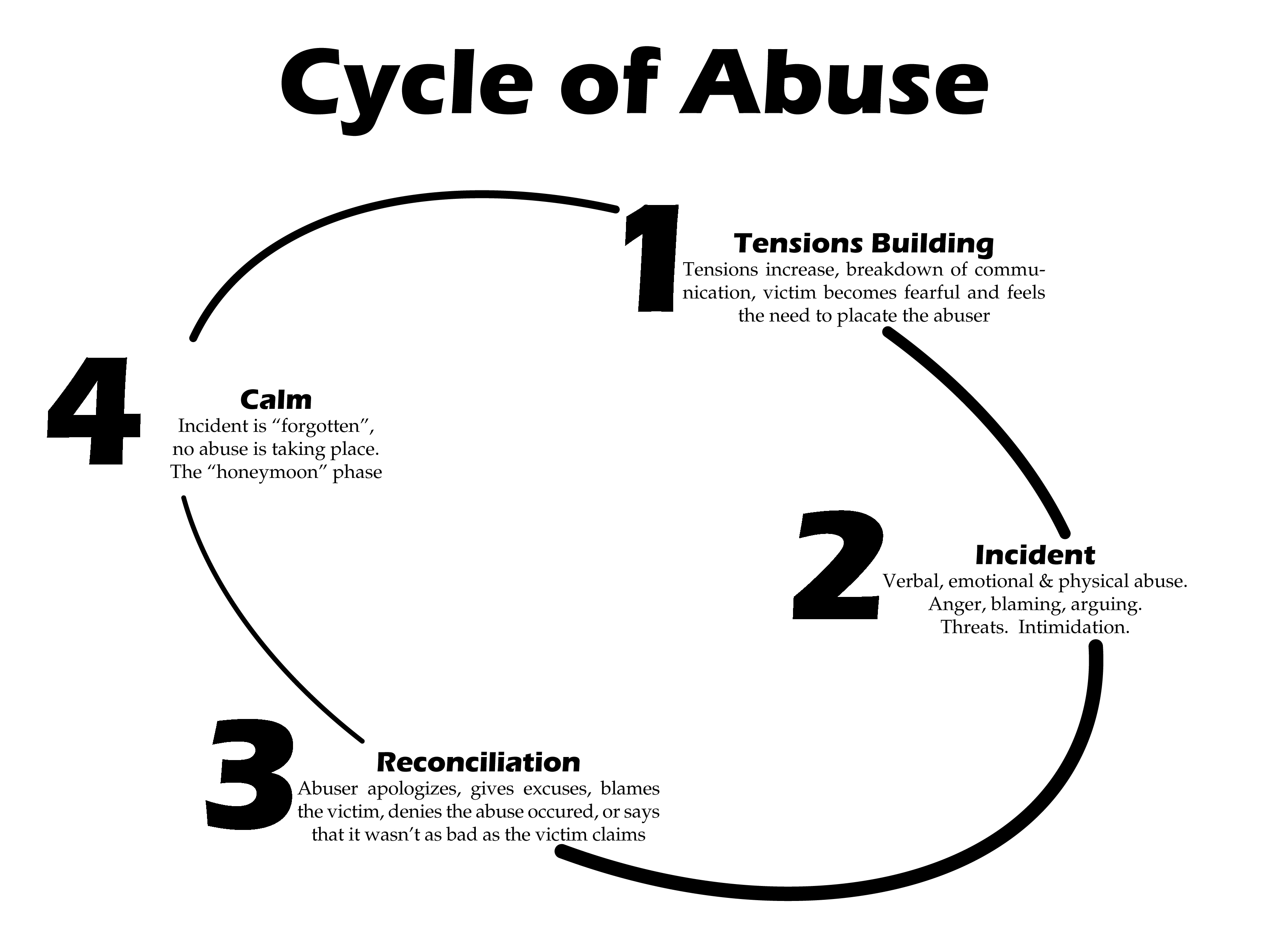
The Cycle of Abuse in Relationships
Abuse often follows a repeating pattern sometimes called the cycle of abuse. Recognizing this cycle can help people understand why abusive relationships can be so confusing and why leaving is often more complicated than outsiders assume.
- Phase 1. Tension building: anger builds with little provocation, leading to minor abuse and excuses. As tension increases, the victim may try to placate the abuser and may begin to assume guilt.
- Phase 2. Incident: the high point of violence or other abuse. This may last up to 24 hours. The abuser often minimizes the severity of what happened. The victim may seek help if the situation feels life-threatening or dangerous for children.
- Phase 3. Reconciliation: the abuser becomes loving, kind, and remorseful while fearing the victim may leave. Guilt, promises, and affection may be used to pull the victim back in.
- Phase 4. Calm: the victim may believe this phase reflects who the abuser “really” is and hope that change is possible. Some victims remain because of fear, damaged self-esteem, financial dependence, children, or social pressures.
- Cycle repeats: abuse often escalates as the pattern repeats and can become increasingly dangerous over time.
Victims can include wives, husbands, intimate partners of any gender pairing, pregnant women, children, and elders.