Signs of Animal Abuse
Animals are especially vulnerable to abuse because they cannot clearly communicate what is happening to them and often cannot escape without human help. Many people search for signs of animal abuse, animal neglect, or animal cruelty because they suspect something is wrong but are not sure what they are seeing. This page is meant to help identify common warning signs.
Animal cruelty can also be associated with broader patterns of violence. Someone who abuses animals may also pose a risk to vulnerable humans. That does not mean every concern proves a larger pattern, but it does mean signs of animal abuse should be taken seriously.
Sometimes young children harm pets without fully understanding the consequences. That still needs to be addressed seriously, but the response may involve education, supervision, and support around empathy, emotional regulation, and safe handling. In other situations, a person may secretly abuse an animal for power, control, punishment, or emotional release.
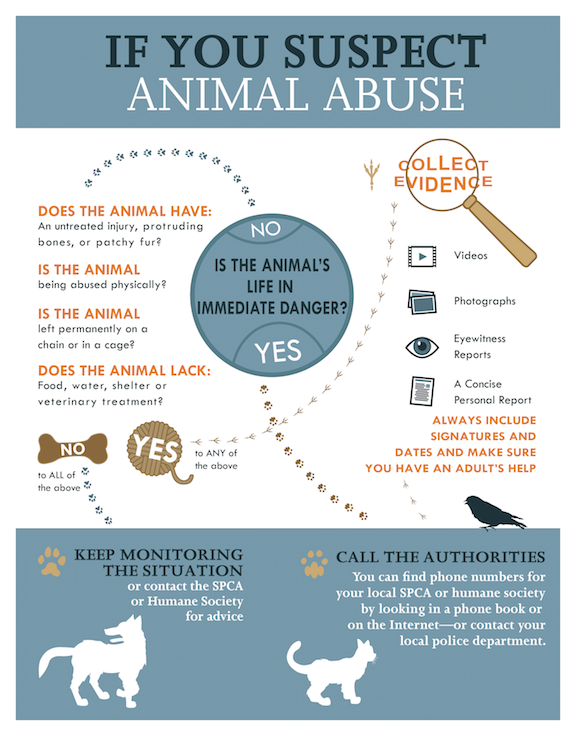
If you suspect animal abuse: document what you saw as clearly as you can, including dates, injuries, behaviour changes, living conditions, and anything you directly witnessed. Then contact your local police department, humane society, rescue organization, animal control service, or shelter. Anonymous reports may be possible, but direct witness information can strengthen a case.
These lists are not all-inclusive. Additional signs not seen on this page may also indicate abuse or neglect.
Signs of Animal Abuse
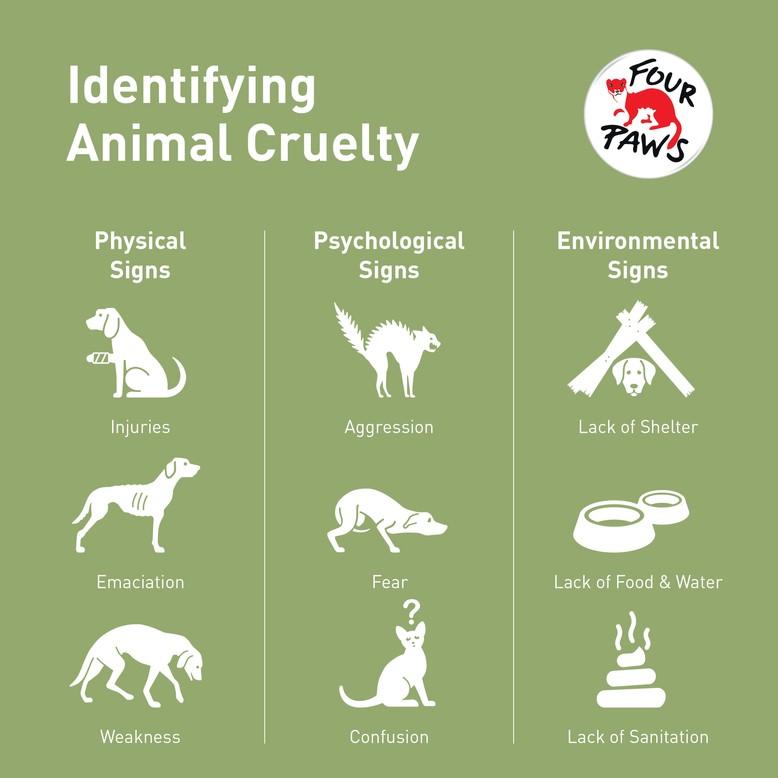
Hitting, kicking, throwing, or other physical harm to an animal may lead to:
- Tucked tail or flinching at human contact
- Difficulty walking, unexplained fractures, or limping
- Unprovoked aggression, whining, cowering, or whimpering
- Overly submissive behaviour, such as rolling onto the back, tail tucked, or urinating out of fear
- Attempts to bite or scratch when petted due to fear
- Sudden avoidance of physical contact
Signs of Animal Neglect
Failing to provide adequate food, hygiene, shelter, or medical care may lead to:
- Changes in appearance, such as fur loss, dull coat, or mange
- Appearing filthy or having fleas or tick infestation
- Very thin or sickly appearance, with bones visibly showing
- Lethargic or aggressive behaviour related to dehydration or distress
- Living area covered in debris or feces
- Congested eyes or ears with visible discharge
- Difficulty walking or inability to walk
- Obvious untreated wounds or injuries
- Excessive barking or whining for long periods
- Begging for food or being unusually friendly with strangers out of need
Other signs of neglect may include:
- Being left in a kennel or chained outside all the time
- Having little room to stand or move while tied or caged
- Being left in a car with closed windows on a hot day
- Being abandoned in a vacated house or empty yard
- Too many animals living together, which may indicate hoarding