Signs of
Child Abuse
This page describes warning signs of child abuse that a parent, relative, teacher, coach, or other adult may notice in a child or adolescent. It covers emotional abuse and neglect, physical abuse, sexual abuse and grooming, and online exploitation. If you are trying to understand whether you are in an abusive relationship, please see the Signs of Domestic Abuse page.
Important: in British Columbia, everyone has a legal duty to report if they believe a child or youth under 19 may be at risk, even if they do not work with children. Call Provincial Centralized Screening at 1-800-663-9122, 24 hours a day. If a child is in immediate danger, call 911.
If you are a young person and someone is hurting you, you can talk to Kids Help Phone any time at 1-800-668-6868 or by texting CONNECT to 686868.
These lists are not all-inclusive, and no single sign proves abuse. Some signs can come from illness, stress, other trauma, or developmental differences, so look for patterns and let trained professionals assess the situation. You do not need proof to make a report.
Note: “child” may also mean “adolescent,” and “parent” may also mean “caretaker.”
Signs of Emotional Abuse and Neglect
- Parent ignores, fails to comfort, or actively rejects the child
- Little to no positive reinforcement is provided
- Harsh, cruel, negative, or belittling comments are directed at the child
- Child’s social, educational, or physical needs are ignored
- Child is often hungry, unwashed, unsupervised, or missing needed medical or dental care
- Toddler does not protest the parent leaving the room
- Child appears to prefer other adults over the parent
- Anxious, fearful, poor sleep, or unusual emotional reactions
- Self-destructive behaviours, social withdrawal, stealing, or cheating
- Low self-esteem, changes in mood, or sudden decline in school performance
Signs of Physical Abuse
- Bruises, welts, bites, scratches, scalds, or cigarette burns
- Areas of baldness or damaged hair from hair pulling
- Explanations for injuries are insufficient or inconsistent
- Parent appears angry at or blaming the child or sibling for the injury
- Exaggerated or absent emotional response from parent regarding injury
- Child flinches, seems afraid to go home, or is wary of adult contact
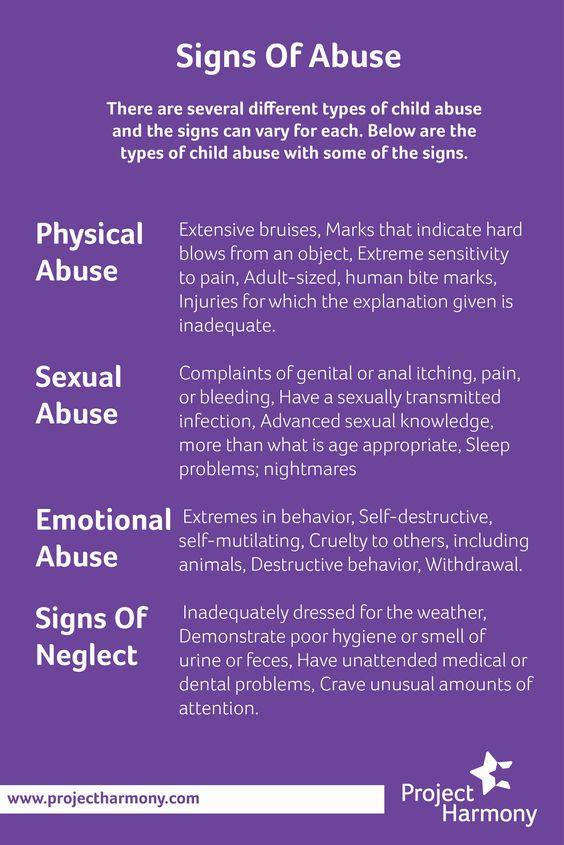
Signs of Sexual Abuse and Grooming
- Complaints of genital irritation, pain, itching, or bleeding
- Regression, such as new bedwetting, thumb sucking, or clinginess
- Sudden fear of a particular person or place, or refusing to go somewhere they used to enjoy
- Reluctance to undress, or wearing extra layers of clothing
- Sexual behaviour, language, or knowledge that is unusual for their age
- A non-parent adult becomes unusually close or shows favouritism
- Child is made to feel special, receives gifts, or is told to keep secrets
- Child has been threatened not to share details of a “special friendship”
- Boundary violations or no safe private space, such as a bedroom
- Parent spends excessive time with child, especially in the child’s room or at night
- Very attentive parent paired with an apprehensive or fearful child
Sexual abuse is most often committed by someone the child knows, including family members and trusted adults in schools, sports, faith groups, and youth programs. Grooming often targets the family’s trust as well as the child’s.
Online Exploitation and Sextortion
Children and teens can be groomed through games, social media, and messaging apps. Sextortion is when someone threatens to share sexual images of a young person unless they send more images or money. Signs can include secretive device use, distress after being online, new online “friends” the child will not talk about, or gifts and game credits from someone you do not know.
If this happens, stay calm and reassure the young person that they are not in trouble. Do not pay or send more images, stop contact, and keep the messages rather than deleting them. Report to police and to Cybertip.ca, Canada’s tip line for online sexual exploitation of children. NeedHelpNow.ca helps teens get sexual images removed from the internet.
Helping Prevent Child Sexual Abuse
- Teach correct names for body parts, so children can describe what happened clearly.
- Teach body safety: no one should touch their private parts or ask them to keep secrets about touching.
- Explain the difference between a surprise, which is fun and ends soon, and a secret that is meant to last.
- Ask schools, camps, teams, and youth programs how they screen staff and volunteers and whether they limit one-on-one time and private messaging with children.
- Know who your child spends time with, both in person and online.
- Be someone they can tell. Staying calm when they share small worries makes it easier to share big ones.
If a Child Tells You They Are Being Hurt
Stay calm, listen, and tell them you believe them and that it is not their fault. Do not press for details or promise to keep it secret. Write down what they said in their own words and report it as soon as you can. Children who have been abused can heal, especially with safe, supportive adults around them. The psychological impact of abuse page explains more.
Common Questions About Child Abuse
Do I have to report child abuse in BC?
Yes. Everyone in BC has a legal duty to report if they believe a child or youth under 19 may be at risk, not only teachers or health care workers. If the child is in immediate danger, call 911 first. Otherwise, call Provincial Centralized Screening at 1-800-663-9122, 24 hours a day. Learn more from the Government of BC.
What if I am not sure it is child abuse?
You do not need proof to make a report. If you have reason to believe a child may be at risk, report your concerns and let a child welfare worker assess the situation. Investigating on your own can put the child at greater risk.
Will the family know I made a child abuse report?
Child welfare workers generally keep the identity of the person who reported confidential, and BC law protects people who report in good faith. You can ask the screening worker about confidentiality when you call.
What should I do if a child tells me they are being abused?
Stay calm, listen, and tell them you believe them and that it is not their fault. Do not press for details, promise to keep it secret, or confront the person they named. Write down what they said in their own words and report it as soon as possible.
What are the signs a child is being groomed?
Warning signs include an adult giving a child special attention, gifts, or privileges; spending time alone with the child; testing physical boundaries; and asking the child to keep secrets. Grooming often targets the family’s trust as well, so the adult may seem especially helpful or generous.
What should I do if my teen is a victim of sextortion?
Reassure your teen that they are not in trouble. Do not pay or send more images, stop contact with the person, and save the messages. Report to police and Cybertip.ca, and use NeedHelpNow.ca for help getting images removed.
How can I talk to my child about body safety?
Use correct names for body parts, explain that no one should touch their private parts or ask them to keep secrets about touching, and tell them they can always come to you. Short, calm conversations repeated over time work better than one big talk.
Could signs of child abuse have another explanation?
Yes. Some signs, such as bedwetting, sleep problems, or changes in mood or behaviour, can come from stress, illness, other trauma, or developmental differences. No single sign proves abuse. Look for patterns, and let trained professionals assess the situation.
Last reviewed: October 2026