Signs of
Elder Abuse
Elder abuse is any action, or failure to act, that harms an older adult or puts them at risk, especially by someone they trust, such as a family member, caregiver, or person managing their money. This page describes warning signs that a relative, friend, neighbour, or care worker may notice. If you are trying to understand whether you are in an abusive relationship, please see the Signs of Domestic Abuse page.
If an older adult is in immediate danger, call 911. For information and support, call the Seniors Abuse and Information Line (SAIL) run by Seniors First BC at 1-866-437-1940. For an adult who cannot seek help on their own, contact the adult protection program at your local health authority. Outside BC, contact your local adult protection service, or call the police non-emergency line for direction.
These lists are not all-inclusive, and no single sign proves abuse. Some signs can come from illness, medication, or dementia, so look for patterns and let trained professionals assess the situation.
Types of Elder Abuse
- Physical abuse: hitting, pushing, rough handling, or inappropriate restraint
- Emotional or psychological abuse: threats, humiliation, intimidation, or isolating the person from others
- Financial abuse: theft, fraud, pressure to change a will, or misuse of a power of attorney
- Sexual abuse: any sexual contact or activity without consent
- Neglect: a caregiver failing to provide food, hygiene, medication, safety, or medical care, or abandoning the person
- Medication misuse: withholding medication, or over-medicating to keep someone quiet or compliant
Signs of Elder Abuse
- Fearful, anxious, poor eye contact, or unusually childlike speech
- Hesitant to speak openly, paranoid, or ashamed
- Unusual or new anger, sadness, or low self-esteem
- Appears underweight, malnourished, or dehydrated
- Inadequate self-care, physical hygiene, or oral hygiene
- Caregiver appears indifferent, angry, hostile, or controlling
- Caregiver does not visit the elder or offer basic assistance
- Caregiver is always present and answers for the elder
- Broken dentures, hearing aids, glasses, or other devices
- Complaints of genital irritation, pain, or itching
- Areas of baldness or damaged hair from hair pulling
- Bruises, welts, bites, burns, bloodshot eyes, or bedsores
- Explanations for injuries are insufficient or inconsistent
- Exaggerated or absent emotional response from caregiver regarding injuries
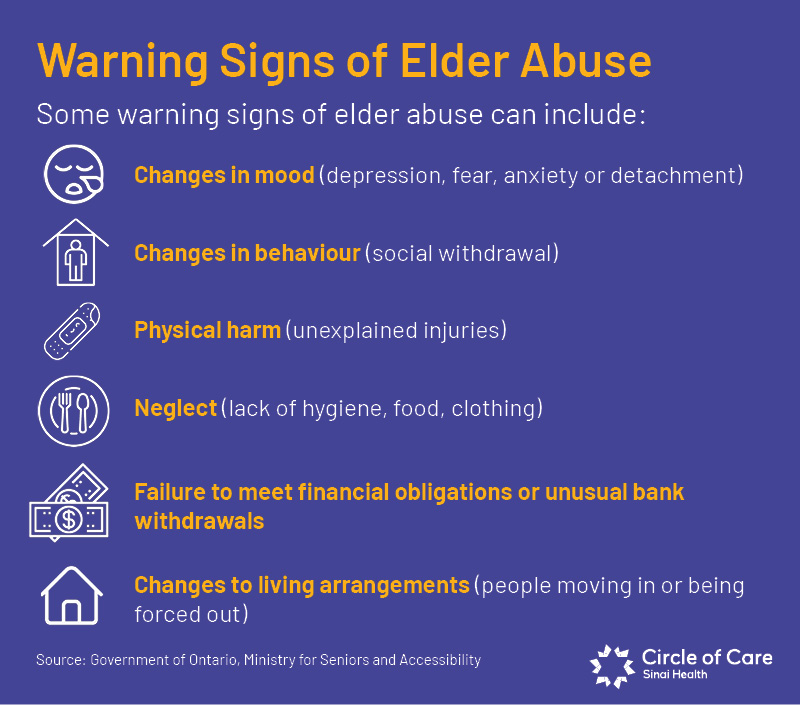
Signs of Financial Abuse
Financial abuse is one of the most common forms of elder abuse and is often committed by someone the older adult knows and trusts.
- Unusual withdrawals, transfers, or purchases the person cannot explain
- New names added to bank accounts, cards, or property title
- Has unwillingly signed over power of attorney or financial control
- Sudden changes to a will or beneficiaries
- Unpaid bills or missing necessities despite enough income
- A new friend, romantic interest, or relative taking a sudden interest in their money
- Missing possessions, or the person no longer knowing what is happening with their finances
Scams Targeting Older Adults
Strangers also target older adults through scams. Common examples include a call from a “grandchild” or “police officer” needing urgent money, romance scams, fake bank or Canada Revenue Agency calls, computer support scams, and investment schemes. Warning signs include pressure to act immediately, requests for secrecy, and payment by gift card, cryptocurrency, wire transfer, or cash handed to a courier.
Encourage the person to hang up and call back using a number they already know, and to talk to someone they trust before sending money. Report scams to the Canadian Anti-Fraud Centre at 1-888-495-8501 and to local police. Many people feel embarrassed after being scammed, so respond with reassurance rather than blame.
Self-Neglect
Some older adults can no longer meet their own basic needs. Signs include an unsafe or very cluttered home, spoiled food, unpaid bills, poor hygiene, missed medication, or refusing needed care. In BC, adult protection programs can also respond to self-neglect when an adult is unable to seek help on their own.
Helping Protect an Older Adult
- Plan ahead with an enduring power of attorney and a representation agreement, chosen carefully, while the person can still make these decisions.
- Stay in regular contact. Isolation is one of the biggest risk factors for abuse.
- Set up direct deposit, bank alerts, and automatic bill payments where helpful.
- Support family caregivers. Exhausted caregivers are more likely to make mistakes or lose patience, and our article on caregiver burnout explains the warning signs.
Common Questions About Elder Abuse
What is elder financial abuse?
Elder financial abuse is the misuse of an older adult’s money or property, such as theft, pressure to change a will, misuse of a power of attorney, or using their bank cards without permission. It is one of the most common forms of elder abuse and is often committed by someone the person knows and trusts.
Who can I call about elder abuse in BC?
If an older adult is in immediate danger, call 911. For information and support, call the Seniors Abuse and Information Line (SAIL) run by Seniors First BC at 1-866-437-1940. You can also contact the adult protection program at your local health authority.
Can I report elder abuse if the older adult does not want me to?
Adults who are capable of making their own decisions have the right to make choices others disagree with, so start by talking with them and offering support. If the person cannot seek help on their own because of abuse, neglect, illness, or disability, you can contact the adult protection program at the local health authority. If they are in immediate danger, call 911. SAIL can help you think through the situation.
Who commits elder abuse?
Elder abuse is most often committed by someone the person knows and depends on, such as an adult child, spouse, other relative, caregiver, or person managing their money. It can also happen in care facilities, and strangers often target older adults through scams.
What is self-neglect in older adults?
Self-neglect is when an older adult can no longer meet their own basic needs, for example by not eating well, missing medication, living in unsafe conditions, or refusing needed care. In BC, adult protection programs can respond when the person is unable to seek help on their own.
How do I report a scam targeting an older adult?
Report it to the Canadian Anti-Fraud Centre at 1-888-495-8501 and to local police. Contact the bank right away if money was sent. Reassure the person that scams are designed to fool people and that reporting them helps protect others.
How can families prevent elder abuse?
Stay in regular contact, plan ahead with a carefully chosen power of attorney and representation agreement, set up bank alerts, and make sure caregivers have support and breaks. Isolation and caregiver exhaustion both increase the risk of abuse.
Could signs of elder abuse have another explanation?
Yes. Some signs, such as confusion, weight loss, falls, or changes in behaviour, can come from illness, medication, or dementia. No single sign proves abuse. Look for patterns, and let trained professionals assess the situation.
Last reviewed: October 2026