Signs of Human Trafficking
Anyone can be targeted for modern slavery, also called human trafficking, regardless of education level, age, or social class. This page focuses especially on warning signs of sex trafficking and trafficking recruitment, although labour trafficking and other forms of exploitation can also occur. Trafficking does not always involve crossing borders. In Canada, most trafficking cases reported to police involve people trafficked within the country, often by someone they know. Being trafficked is never the victim’s fault. Awareness of grooming tactics and red flags can help prevent serious harm.
Human trafficking is a large-scale global issue, and no single page can cover every possible warning sign. For significantly more information and training, visit Polaris Project’s training page.
If you think someone may be in immediate danger, call 911. If you suspect trafficking and need support or next steps, contact the Canadian Human Trafficking Hotline at 1-833-900-1010, available 24 hours a day, or the U.S. National Human Trafficking Hotline at 1-888-373-7888.
In British Columbia, you can also call or text VictimLinkBC at 1-800-563-0808 for free, confidential support 24 hours a day.
Signs of Trafficking Recruitment
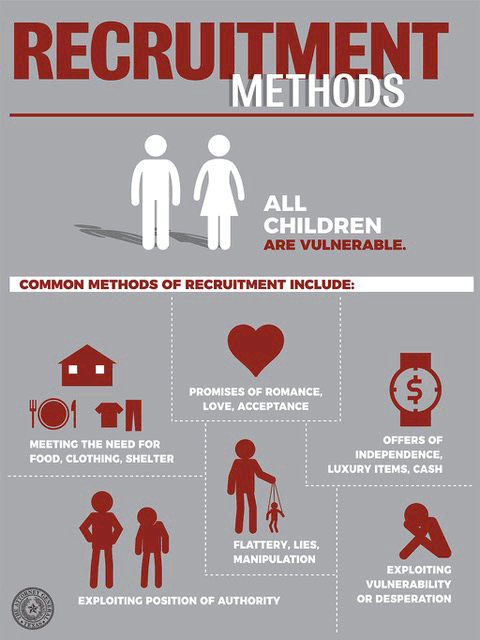
- Commenting on social media photos or sending direct messages to start contact
- Feigning romantic interest, love bombing, or using extreme flattery
- Asking about financial hardship, desperation, housing instability, or family conflict
- Promising gifts, money, financial rescue, or a better life
- Offering to pay to buy the target’s worn clothing or personal items
- Offering jobs for dancing, modelling, content creation, or travel-based work
- Claiming a job will include food, housing, transportation, or total care
- Assuring the target that they will “take care of everything”
- Promising to save the target from domestic violence, poverty, or a difficult home life
- Requesting selfies or identity proof early in the interaction
- Buying travel tickets for the target in long-distance situations
- Being unwilling to meet in a public place in local situations
Read more about the grooming process. Many traffickers pose as romantic partners, which overlaps closely with the patterns described on our signs of domestic abuse page.
Signs Someone May Be Being Trafficked
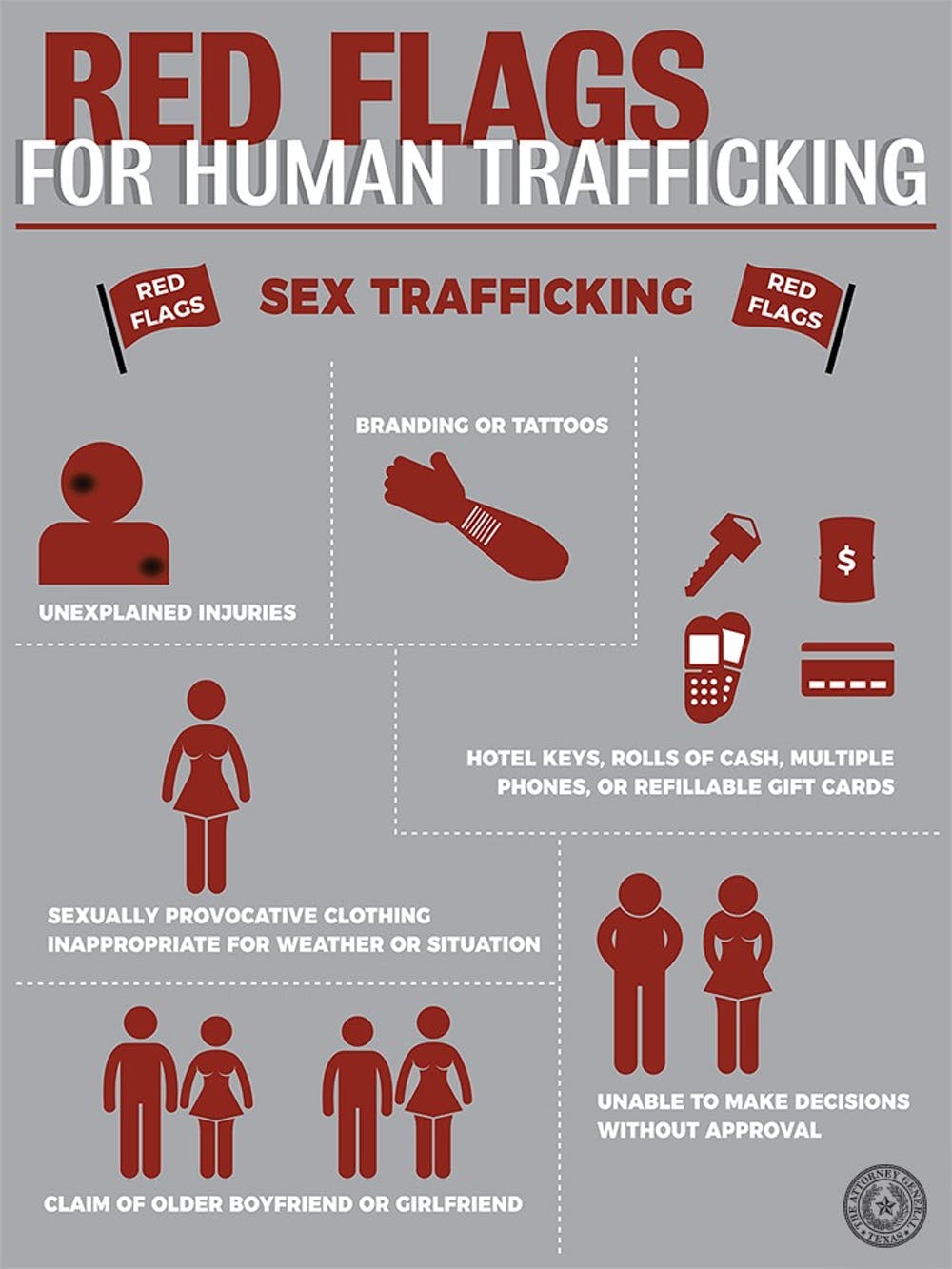
- Appears withdrawn from family, friends, school, work, or community organizations
- Wears new or expensive things outside what they would normally be able to afford
- Has had a sudden or dramatic change in behaviour
- Is a minor involved in commercial sex acts
- Has bruises in various stages of healing
- Comes across as fearful, timid, submissive, or hypervigilant
- Seems disoriented, confused, or shows signs of mental or physical abuse
- Shows signs of being denied food, water, sleep, or medical care
- Is often with someone they seem to defer to or fear
- Seems controlled in where they go, what they say, or who they talk to
- Appears coached on what to say
- Lacks stable living conditions, freedom of movement, or personal possessions
- Appears to be under unusual security or surveillance
Signs of Labour Trafficking
- An employer or recruiter holds the person’s passport, ID, or work documents
- The person owes a debt to an employer or recruiter that never seems to shrink
- Very long hours for little or no pay, or pay that is withheld
- Living at the worksite or in housing controlled by the employer
- Threats of deportation, violence, or harm to family if they complain or leave
Do not confront a suspected trafficker or try to rescue someone yourself, as this can put you both at risk. If you are planning to leave an exploitative situation, the escape and safety planning page may help.
If you are in Canada, call the Canadian Human Trafficking Hotline at 1-833-900-1010. If you are in the United States, call the National Human Trafficking Hotline at 1-888-373-7888 or text 233733.
Common Questions About Human Trafficking
What is human trafficking?
Human trafficking is recruiting, moving, holding, or controlling a person in order to exploit them, often for sex or labour, using force, threats, deception, debt, or abuse of power. It is a serious crime in Canada.
Does trafficking always involve crossing borders?
No. Trafficking can happen entirely within one country or one city. In Canada, most trafficking cases reported to police involve people trafficked within the country.
How do traffickers recruit people online?
Traffickers often start with friendly or flattering messages on social media, gaming platforms, or dating apps, then build trust, offer gifts or jobs, and gradually isolate the person. Requests to move the conversation to private apps, keep the relationship secret, or meet far from home are warning signs.
Can someone be trafficked by a partner or family member?
Yes. Many people are trafficked by someone they know, including a boyfriend, partner, or relative. A trafficker may pose as a romantic partner, use love and dependence to gain control, then pressure the person into sex work. This overlaps closely with domestic abuse.
What is labour trafficking?
Labour trafficking is forcing or tricking someone into work through threats, debt, or control. Signs include an employer holding someone’s ID or passport, debts that can never be paid off, very long hours for little or no pay, living at the worksite, and threats about immigration status.
What should I do if I think someone is being trafficked?
If someone is in immediate danger, call 911. Otherwise, contact the Canadian Human Trafficking Hotline at 1-833-900-1010, available 24 hours a day. Do not confront the suspected trafficker or try to rescue the person yourself, as this can put you both at risk.
Is a minor involved in commercial sex being trafficked?
Any person under 18 involved in commercial sex is a victim of sexual exploitation, whether or not force is used. Buying sexual services from a minor is a serious crime in Canada. Report concerns to police or the Canadian Human Trafficking Hotline.
How can trafficking survivors get support?
The Canadian Human Trafficking Hotline can connect survivors with shelter, counselling, legal help, and other services. In BC, VictimLinkBC at 1-800-563-0808 also offers 24-hour support. Recovery takes time, and trauma-informed care can help.
Last reviewed: October 2026